


“If Bunia could speak,
it will wake up with hope tomorrow.
It will ask to stop bleeding.
It will ask to breathe peace.”
Inside the conference room of MONUSCO’s logistics base in Bunia, these words were spoken in a single voice.
They did not come from one poet alone, but from a group of women — community mediators, women’s rights advocates, young leaders and female peacekeepers — gathered for a poetry workshop.
The text they were reading had just been born before their eyes: A collective poem titled “If Bunia Could Speak,” written line by line by the participants.
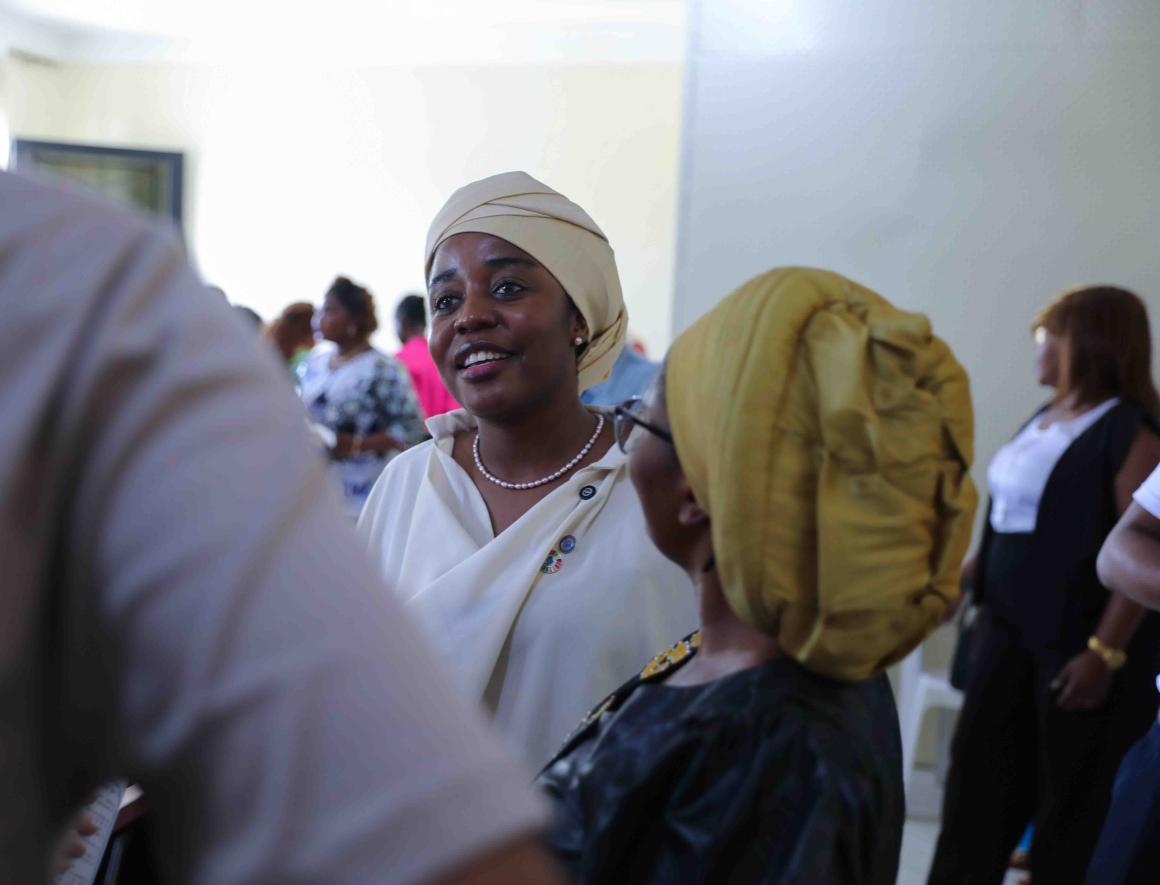
When poetry becomes a space for healing
The Healing through Poetry workshop, facilitated by Nigerian poet and activist Maryam Bukar Hassan, also known as Alhanislam, took place on 14 March 2026 in Bunia, during her visit to Ituri from 13 to 16 March.
Appointed in 2025 as the first UN Global Peace Advocate for Peace, she uses art and storytelling to amplify the voices of communities affected by conflict.
The session brought together around thirty women peace actors from across Ituri, including MONUSCO-trained mediators, civil society representatives, women’s rights defenders and female peacekeepers.
Through creative exercises such as the “Tree of Life,” participants reflected on their strengths, challenges and aspirations for peace.
For Maryam Bukar Hassan, spaces like this respond to a deep need.
“The purpose of this Healing through Poetry session is to provide psychosocial support for women. Many of them lead peace processes while being survivors of violence or trauma themselves. What they often need most is mental strength.
I had goosebumps seeing how they brought out all their emotions and aspirations for their city, their province and their country. I hope they can embrace the power of art to release their trauma and pass that strength on to other women, even in the most remote areas.”
The purpose of this Healing through Poetry session is to provide psychosocial support for women. Many of them lead peace processes while being survivors of violence or trauma themselves. What they often need most is mental strength.
“Writing and sharing brings relief”
Throughout the workshop, participants shared their experiences, fears and hopes.
For Falone Nzola, head of the Ituri branch of the Coalition of Women Human Rights Defenders, the experience was particularly powerful.
“Women need this kind of experience because it is deeply healing. Simply writing and sharing our fears and emotions, one by one, and then turning them into a collective poem provides psychological relief and strengthens resilience.
Beyond the efforts we make for peace, mental health is essential. I was deeply moved by this moment, and it strengthened my commitment to our common cause: peace.”
Sarah Muderwa, coordinator of the Synergy of Girls of Ituri, shared a similar feeling.
“We had what I would call a real group therapy session. We explored in depth the problems women face in Bunia and across Ituri. Maryam shared her experience and stories that resonated deeply with us.
As women working for peace, we often carry the problems of others, but we are not always listened to ourselves. This session allowed us to share things I had never been able to say before. It was very beneficial for all of us and inspiring, because it gave us tools to help other women as well.”
Immersing in local peace initiatives
During her stay, the Global Peace Advocate also sought to better understand local peacebuilding efforts in Ituri.
She accompanied a joint MONUSCO and Bangladesh contingent patrol to Yambi Market, where she exchanged with traders and community leaders about the economic and security challenges women face daily.
She also met female peacekeepers from several contingents, who shared their experiences of peacekeeping and the challenges of serving far from their families while supporting communities in conflict-affected areas.
The second day of the visit focused on initiatives supported by the United Nations Peacebuilding Fund, particularly the GPI 2.0 project, which aims to strengthen the participation of women’s networks and organizations in mediation, community dialogue and social cohesion efforts across Ituri.
Ms. Bukar Hassan also visited the medical center run by the Congolese NGO Solidarité Féminine pour la Paix et le Développement Intégral (SOFEPADI), which provides care for survivors of conflict-related sexual violence. The visit highlighted both the challenges faced by the facility and the resilience of the women supported by the organization.
Bunia, still standing
In their collective poem, the participants imagine a city that speaks — a city calling for security and peace.
But above all, a city that refuses to disappear.
“But we are still here…
Bunia your youths and women are still here reclaiming peace and security.”
Through the words written by these women peacebuilders, it is more than the voice of a city that rises — it is the voice of an entire province, Ituri, refusing to give up on peace.
-Didier Vignon Dossou-Gbakon


