


On the second day of his visit to Beni in North Kivu, Tuesday, April 21, 2026, the head of MONUSCO, James Swan, met with local authorities, members of civil society, and representatives of women’s and youth groups from the town of Eringeti. He emphasized that the core of the UN mission’s mandate is the protection of civilians.
“All MONUSCO contingents are primarily here for security issues. That is the main mandate. Protecting civilians means ensuring security,” explained James Swan.
Women, the primary victims
For several minutes, James Swan listened to the concerns of civil society members, as well as representatives of women’s and youth groups who had come to meet him.
“It is women who are the primary targets of those carrying weapons illegally. They are raped. There are unwanted pregnancies. They face difficulties in accessing basic necessities. It is up to you to reflect on how you can continue to support them so they can find peace and security in their daily lives,” said the representative of women’s associations, Fabiola Kahindo Rehema.
However, Ms. Kahindo acknowledged that over the past year, “threats against the population have significantly decreased thanks to government security forces and MONUSCO present here.”
“People can move around freely and return safely. That is something we appreciate,” she added.
The youth representative echoed the same view, explaining that the establishment of a new peacekeepers’ base in the area has notably allowed young motorcycle drivers—the main means of transport in the region—to continue operating until early evening.
But Roger Kakese Kasereka stated that this was still not enough, noting in particular that some civilian massacres have occurred near peacekeepers’ positions. According to him, this has created confusion in public opinion and contributed to anti-MONUSCO sentiment observed at times among young people in the region.
Roger Kakese Kasereka expressed the wish for better coordination between the army, the police, and MONUSCO to improve the security situation.
The thorny issue of displaced persons
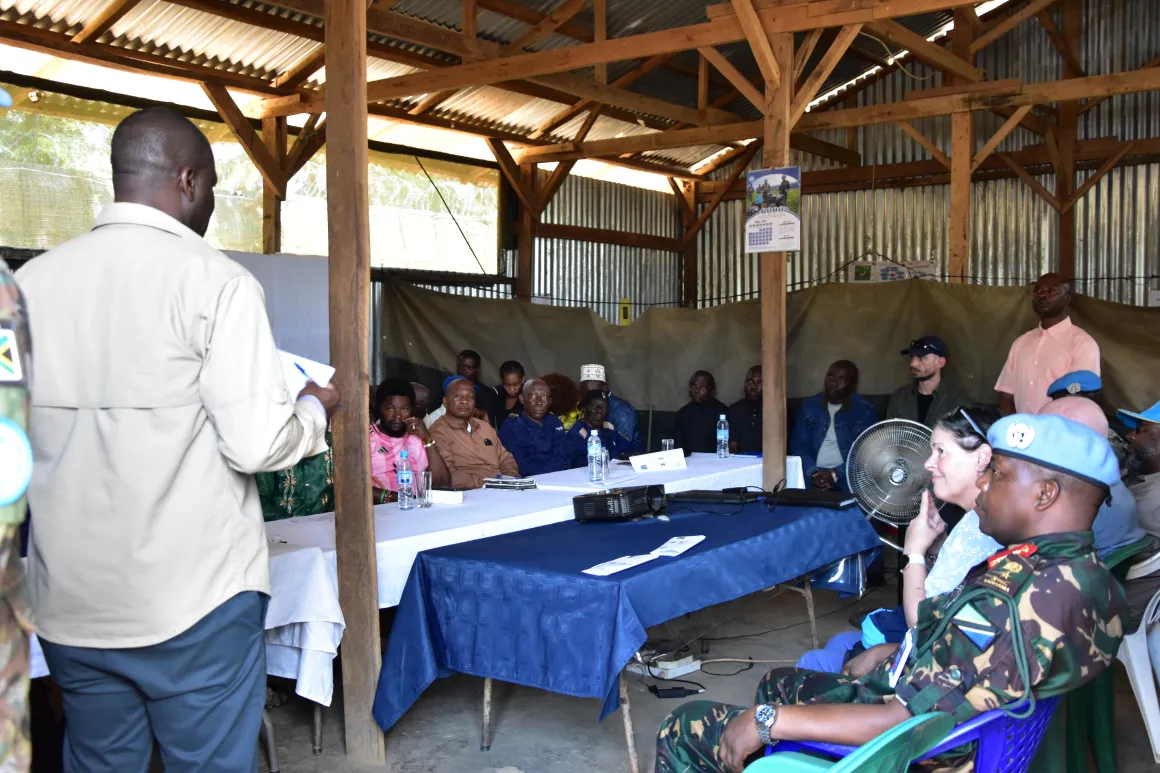
For his part, the president of civil society in Eringeti, Rachid Maliro, raised the issue of displaced persons and returnees.
The deterioration of the security situation in Ituri has forced many households to seek refuge in Eringeti. “For two years now, this population we have taken in lacks food and clothing. Our leaders are struggling to find ways to assist them,” explained Rachid Maliro.
These families come in particular from Mambasa and Komanda in Ituri, where the activity of armed groups has forced many families to flee. These displaced persons are currently living in precarious conditions.
“We have three sites with twenty-five [families] who lack food. To get something to eat, they have to go to the fields to help local residents. If they assist with small tasks like cultivating cassava leaves, that is when they can find something to eat. Please urgently send us NGOs to provide them with food and non-food items; that would help us,” he pleaded.
In addition, Rachid Maliro requested the installation of a morgue in Eringeti. The only morgue available in the region is located in Oicha, about thirty kilometers away.
Security, the main mandate
James Swan welcomed the discussions with representatives of the population of Eringeti.
“Given the importance of Beni and its surroundings, including Eringeti, for MONUSCO’s presence in the eastern part of the country, I plan to return fairly regularly to continue these in-depth discussions,” he said.
The head of MONUSCO said he was counting on the participants in these discussions to ensure better communication between the Mission and the civilian population. He acknowledged that there had been difficult moments between MONUSCO and the local population in the past, but noted that there is now better understanding.
“I recognize that from time to time there were tense and heated moments between the community and MONUSCO. This situation is not desirable from our perspective. It is not at all the kind of relationship we want with the population and the community,” he assured.
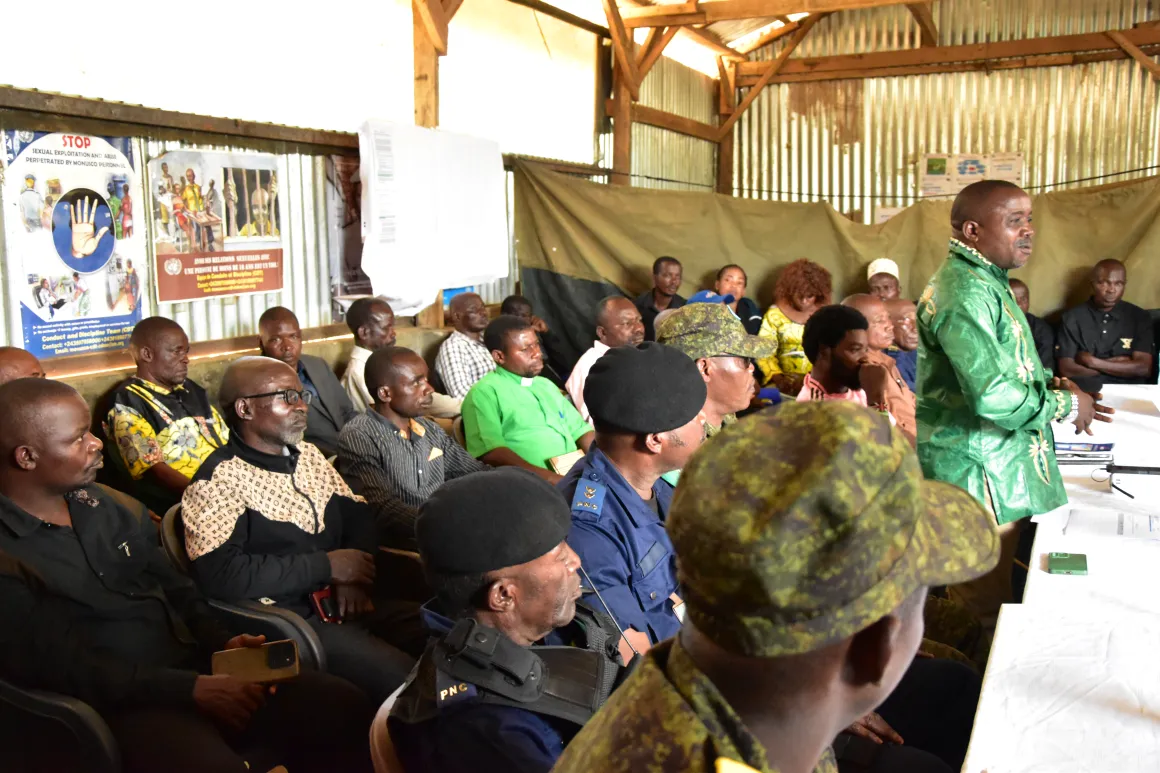
Regarding the requests made by some participants during the discussions, James Swan said he understood the community’s concerns, while emphasizing that the return of security would create a more favorable environment for entrepreneurship and development.
“We understand that there are many other demands from the population and the community. That is well understood. We hope that improvements in security will also enable faster development of entrepreneurial activities, such as the transport of agricultural products. We hope that security will also contribute to the development and well-being of the population,” he explained.
The head of MONUSCO also referred to the work of United Nations agencies, particularly on humanitarian issues.
“I believe that on a future visit, we will be better able to tell you more about their activities,” he promised. However, James Swan insisted that the core of the Mission’s work remains the protection of civilians.
“All MONUSCO contingents are primarily here for security issues. That is the main mandate: security. Protecting civilians means ensuring security. At the same time, of course, we understand that there are many other demands from the population and the community. That is well understood,” he emphasized.
James Swan is continuing his tour in the eastern part of the country. This is his first since taking office. After Beni, he will travel to Bunia, where he is expected to arrive this Tuesday, April 21, in the evening.
Joël BOFENGO


