


As part of its support for the peace process in the Democratic Republic of the Congo (DRC), MONUSCO is assisting the Disarmament, Demobilization, Community Recovery and Stabilization Programme (P-DDRCS) in strengthening its technical and operational capacities to implement the process of disarmament, cantonment and repatriation of combatants from the Democratic Forces for the Liberation of Rwanda (FDLR).
A one-week training programme organized by the Cairo International Center for Conflict Resolution, Peacekeeping and Peacebuilding (CCCPA), with the support of MONUSCO, the Government of the DRC and Egypt, opened in Kinshasa on Monday, 26 October. It brought together approximately 60 participants, including representatives of the P-DDRCS, MONUSCO and state institutions, as well as diplomatic representatives, including those from Qatar and Canada.
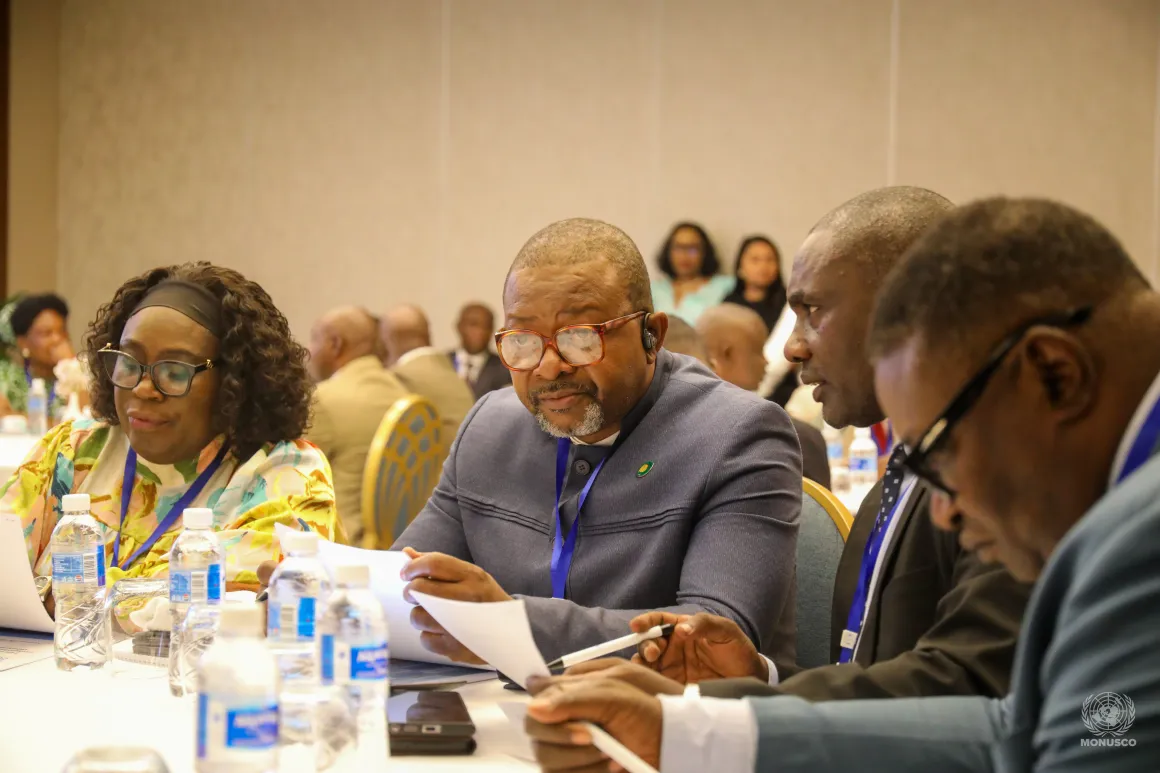
Organized at the request of the Government of the DRC and stemming from an initiative by Egypt’s Permanent Mission to the United Nations, the training takes place against the backdrop of developments in the peace process and efforts to repatriate FDLR combatants.
Egypt, which co-chairs the Group of Friends of Disarmament, Demobilization and Reintegration (DDR), reaffirmed its commitment at the opening of the training to strengthening the national capacities of the Congolese authorities in this area.
“Egypt’s position is very clear. We support lasting peace, sovereignty, territorial integrity and the unity of the DRC,” said Egypt’s Ambassador to the DRC, His Excellency M. Amr Abdullah.
The Egyptian diplomat also emphasized that the training aims to facilitate the return of former combatants to civilian life, reduce armed violence and create an environment conducive to lasting peace. Recalling the longstanding ties between Egypt and the DRC, he reaffirmed his country’s willingness to support Congolese efforts in this area.
“Peace is built from within. We are here to help you achieve that,” he added.
For his part, the designated Director General of the CCCPA, Hecham Al Mekwad, stressed that “implementing the FDLR disarmament, demobilization and cantonment protocol requires national institutions that are prepared, coordinated and capable of translating commitments into concrete operations on the ground.”
“This is where we hope to contribute alongside our Congolese and United Nations partners. This programme aims to strengthen the technical and operational capacities of the P-DDRCS so that it can provide technical leadership for the effective, coordinated and sustainable implementation of this protocol,” he said.
25 Years of Experience in the Repatriation of Foreign Combatants
Speaking in turn, the Head of MONUSCO, James Swan, recalled that the Mission’s extensive experience in repatriating foreign combatants from the DRC had recently been documented in a retrospective study examining a quarter-century of operations in the region.
“The report highlights the successful repatriation of more than 32,000 former combatants and their dependants. This record represents a major achievement and demonstrates the tangible and lasting impact of non-military approaches to stabilizing the subregion,” he stated.
Mr. Swan also welcomed the partnership between the P-DDRCS, the CCCPA and MONUSCO. According to him, this collaboration “aims to strengthen the operational capacities needed to support the ongoing peace process.”
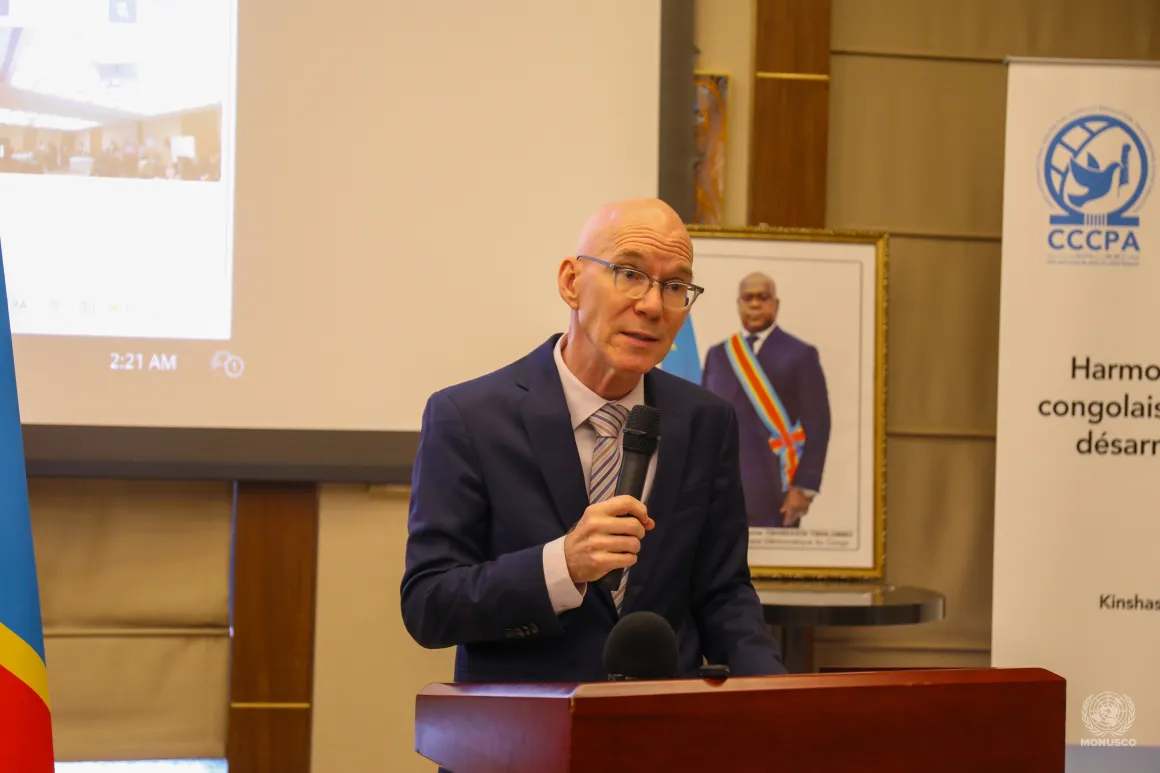
The Head of MONUSCO explained that the United Nations Mission’s contribution to the workshop “falls within MONUSCO’s longstanding mandate […] to support processes and mechanisms for the disarmament, demobilization, repatriation, resettlement and reintegration of foreign combatants and their dependants.”
“Drawing on this experience gained on the ground, MONUSCO is now mobilizing its DDR specialists to contribute to this training, in partnership with the P-DDRCS and the CCCPA,” he explained.
For his part, the Coordinator of the P-DDRCS, Jean de Dieu Ntanga Ntita, thanked MONUSCO for its commitment of more than 25 years to the disarmament, demobilization, repatriation, resettlement and reintegration (DDRRR) process, which has enabled thousands of combatants and their dependants to return to their countries of origin.
“We are not thanking a track record; we are receiving a legacy—and we must collect it while it is still available,” he said, emphasizing the importance of drawing on the experience accumulated by the Mission.
He recalled that in 2024, before the United Nations General Assembly, President Félix Tshisekedi had called for investment in strengthening national capacities so that peacebuilding efforts could be led by Congolese institutions that are equipped, empowered and accountable.
“Supporting the P-DDRCS means responding to that call, both in letter and in spirit,” Mr. Ntanga Ntita concluded.
The training, which continues in Kinshasa until Friday, 30 October, marks the first phase of a capacity-building programme. A second phase is scheduled to take place in Cairo, Egypt, in January 2027.
-Joël Bofengo


