


“I feel sorry for her.” That is Winner Kababu’s response when she is asked how she would feel if she were introduced to a girl her age who was already married. Her classmate, Exodie Mukena, sitting right beside her, nods in agreement. Both are 16 years old and attend Georges Williams School Complex, named after the English philanthropist who founded the Young Men’s Christian Association (YMCA). It was precisely at the YMCA premises in Kinshasa that UNPOL and the Congolese National Police chose to organize an awareness-raising session to mark the International Day of the Girl Child, celebrated every year on October 11.
“Not before the age of 25”
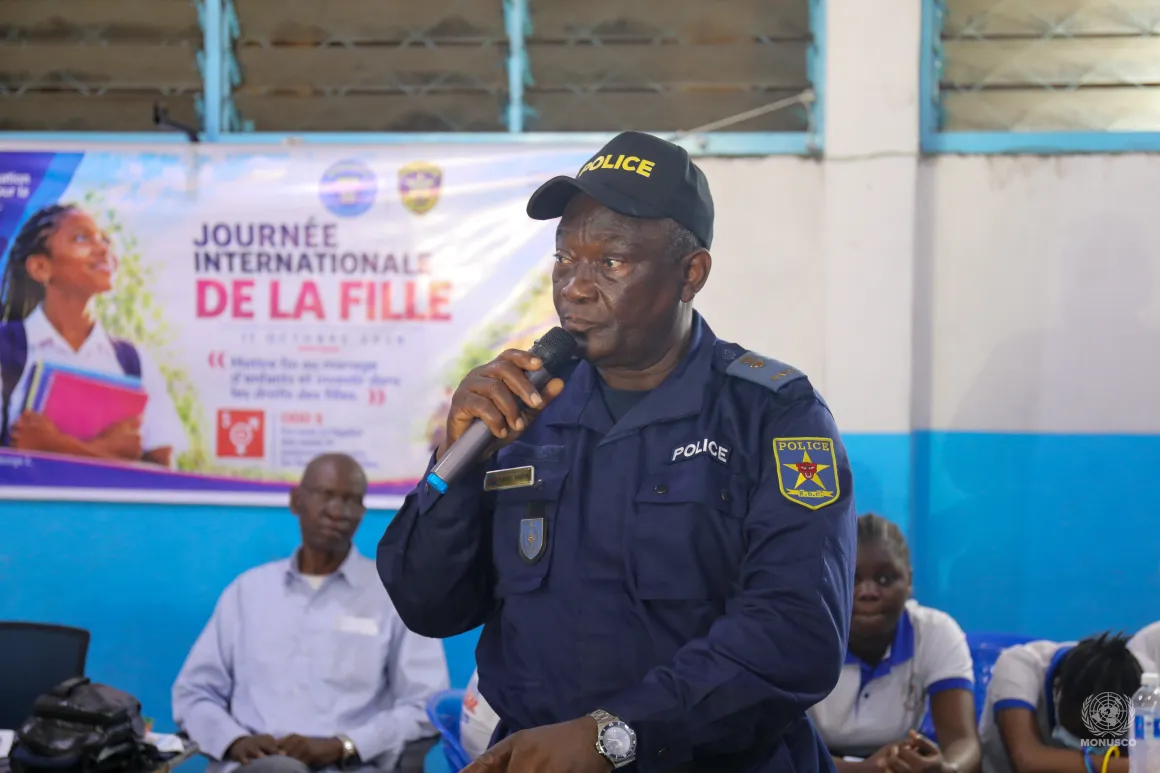
“Ending Child Marriage and Investing in Girls’ Rights” is the theme chosen for this year’s celebration.
“A child does not get married,” declares Senior Superintendent Placide Kabeya, Deputy Head of the Child Protection and Sexual Violence Prevention Department within the Congolese National Police.
Winner Kababu and Exodie Mukena listen attentively to his words. Neither of them can imagine getting married before completing her university studies.
“Not before the age of 25,” Exodie insists. “Not before 23,” her classmate Winner echoes.
Next year, both girls will sit for the State Examination, which marks the end of secondary education in the Democratic Republic of the Congo and qualifies students for university admission.
However, even with their secondary school diplomas in hand, Winner Kababu believes she will not yet have the maturity needed to take on the responsibilities of marriage.
“I need to work. I need to have my own income before committing to marriage,” emphasizes Exodie Mukena, who aspires to pursue a career in science.
“Girls must be protected”
When informed of the two girls’ views, Senior Superintendent Placide Kabeya smiles.
“I cannot say what the ideal age for marriage is. But the law is clear: no marriage before the age of 18.”
For about an hour, he discusses the importance of guiding young girls and protecting them from abuse. Education is the first and foremost means of providing such guidance.
“Girls must be educated to ensure the safety of society,” the police officer explains.
Richard Matondo, representing YMCA-DRC during the awareness session, also emphasizes the importance of educating girls.
Education lies at the heart of the project launched by George Williams nearly two centuries ago. In 1844, he opened reading rooms and introduced educational classes for young people, first in London and later expanding the initiative to other cities in England and around the world.
“Girls must study within their communities and for the benefit of their communities,” summarizes Richard Matondo.
In total, around thirty girls took part in the awareness-raising session organized by UNPOL and the Congolese National Police.
“Girls represent a valuable asset to their communities,” notes Djon Daniele, UNPOL’s Gender Adviser, who believes that society must guarantee every young person the right to learn.
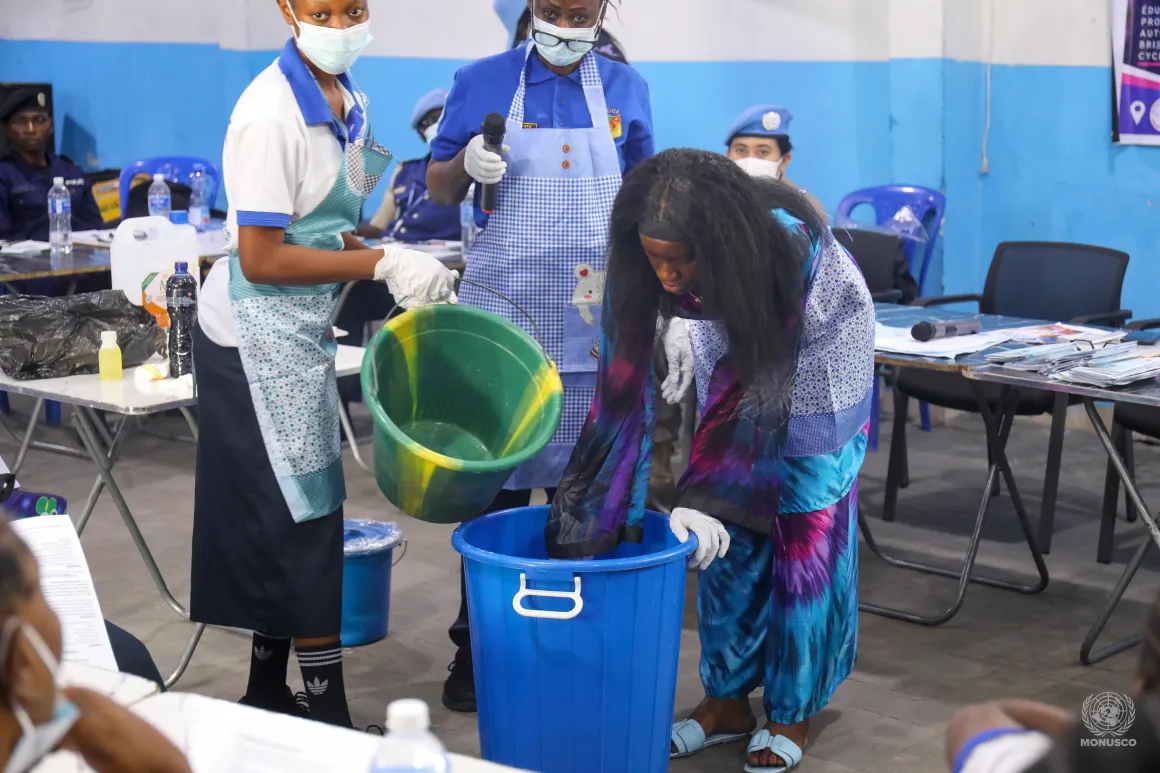
Following the discussions and exchanges, the girls learned how to make bleach and soap. These are practical skills they can use to generate income in the future and achieve greater financial independence.
Winner and Exodie are convinced that no girl would willingly agree to marry at such a young age. They point to the pressure of certain practices that must be challenged through education.
“We must allow girls to study and get married when they decide they are ready,” Winner concludes.
Article 48 of the Child Protection Law stipulates that “child betrothal and child marriage are prohibited.”
-Joël Bofengo


