


This May 29, as every year for the past fourteen years, the international community pays tribute to the men and women who, under the flag of the United Nations, dedicate their lives to peace.
They come from all corners of the world. Since 1948, more than two million men and women from 125 countries have served in 71 peacekeeping missions. Today, nearly 87,000 peacekeepers — civilians, police officers, and military personnel — are deployed in 12 conflict zones across Africa, Asia, Europe, and the Middle East.
Established in December 2002 by the United Nations General Assembly, the International Day of UN Peacekeepers, celebrated every May 29, honors their commitment and their essential contribution to international peace and security.
A commitment forged through sacrifice
Since the deployment of the first peacekeeping mission — UNTSO — on May 29, 1948, in the Middle East, more than 4,200 peacekeepers have lost their lives while serving the cause of peace, including dozens in the Democratic Republic of the Congo (DRC).
Despite the daily risks, harsh living conditions, and separation from their families, these women and men continue to answer the call. Their commitment is rooted in a deep conviction: helping build a fairer, safer, and more peaceful world.
A Mission at the heart of challenges
In the Democratic Republic of the Congo, the United Nations Organization Stabilization Mission (MONUSCO), deployed since 1999, is among the most complex and dangerous operations.
Between 1999 and 2022, more than 400 United Nations personnel lost their lives in the country, including 327 peacekeepers. Despite this heavy toll, the mission remains fully committed alongside the authorities and the population.
Its work covers a broad range of activities: protection of civilians, support to institutions, promotion of human rights, security sector reform, disarmament and reintegration of former combatants, as well as the promotion of press freedom. However, the core of the Mission’s mandate remains the protection of civilians.
Protecting, securing, supporting
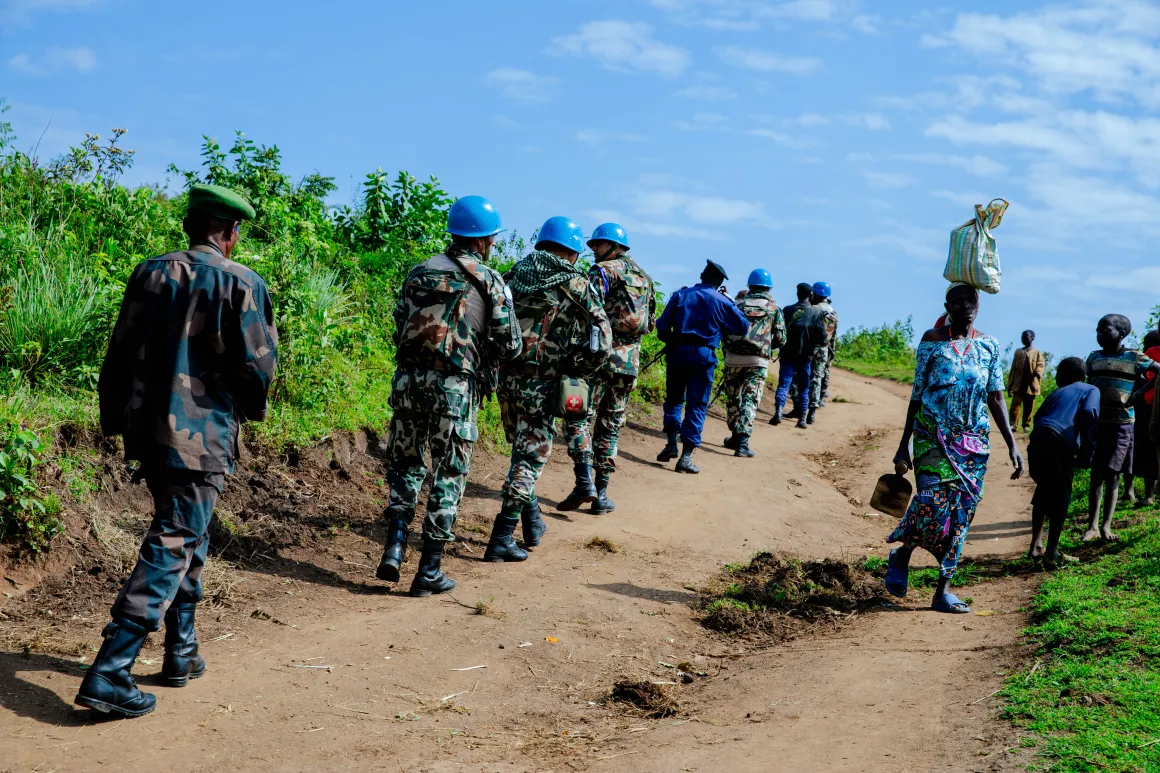
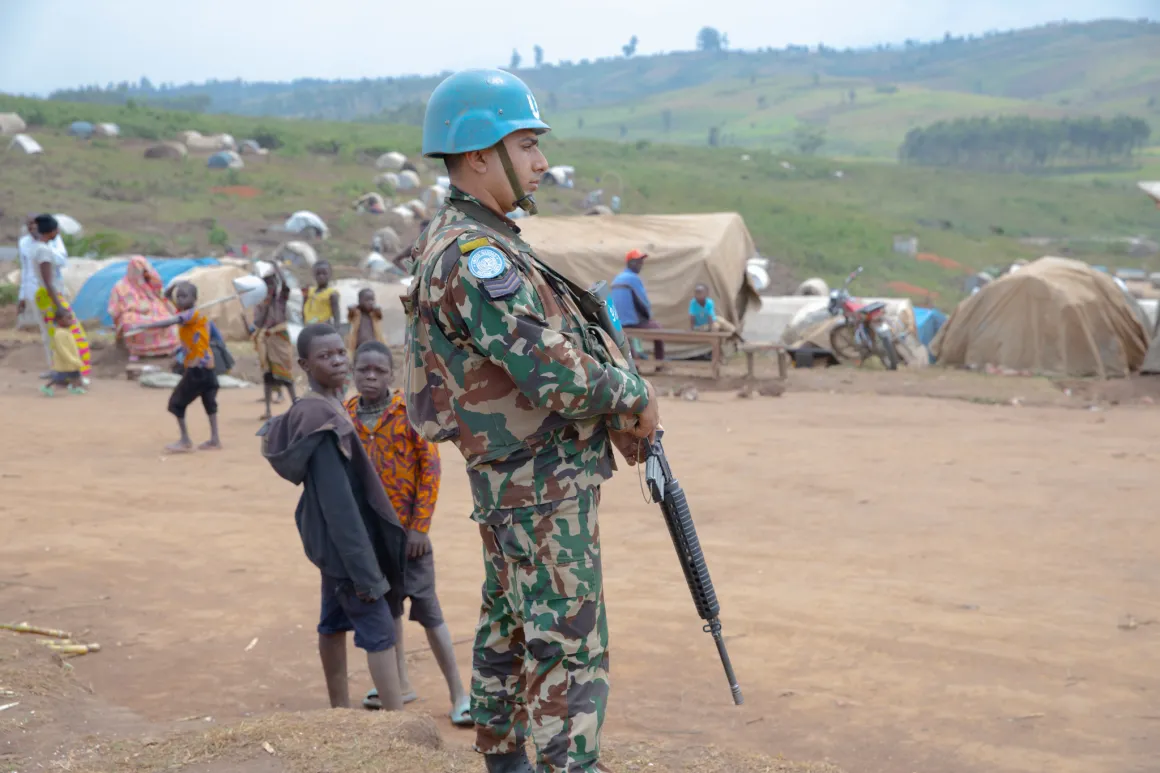
In Ituri Province, particularly in the Djugu territory, peacekeepers play a vital role for displaced populations.
“MONUSCO protects us day and night. Thanks to them, we are still alive,” testify internally displaced persons forced to flee armed violence in their home villages.
Since 2017, the Mission has ensured the security of hundreds of thousands of people living in sites such as Lodha, Djaiba, Plaine Savo, and Rhoe.
Every day, peacekeepers conduct patrols to prevent attacks by armed groups, secure strategic roads, facilitate access to farmland, escort students so they can safely sit for their exams, organize training sessions in various fields, inspect detention facilities run by security services, and rehabilitate bridges, schools, roads, and public buildings.
For local authorities, their presence is essential to maintaining relative stability in a region deeply affected by violence.
“We shower MONUSCO with flowers for its work. MONUSCO works in the interest of the Democratic Republic of the Congo,” acknowledged the administrator of Djugu territory, Colonel Ruphin Mapela.
A police force serving the population
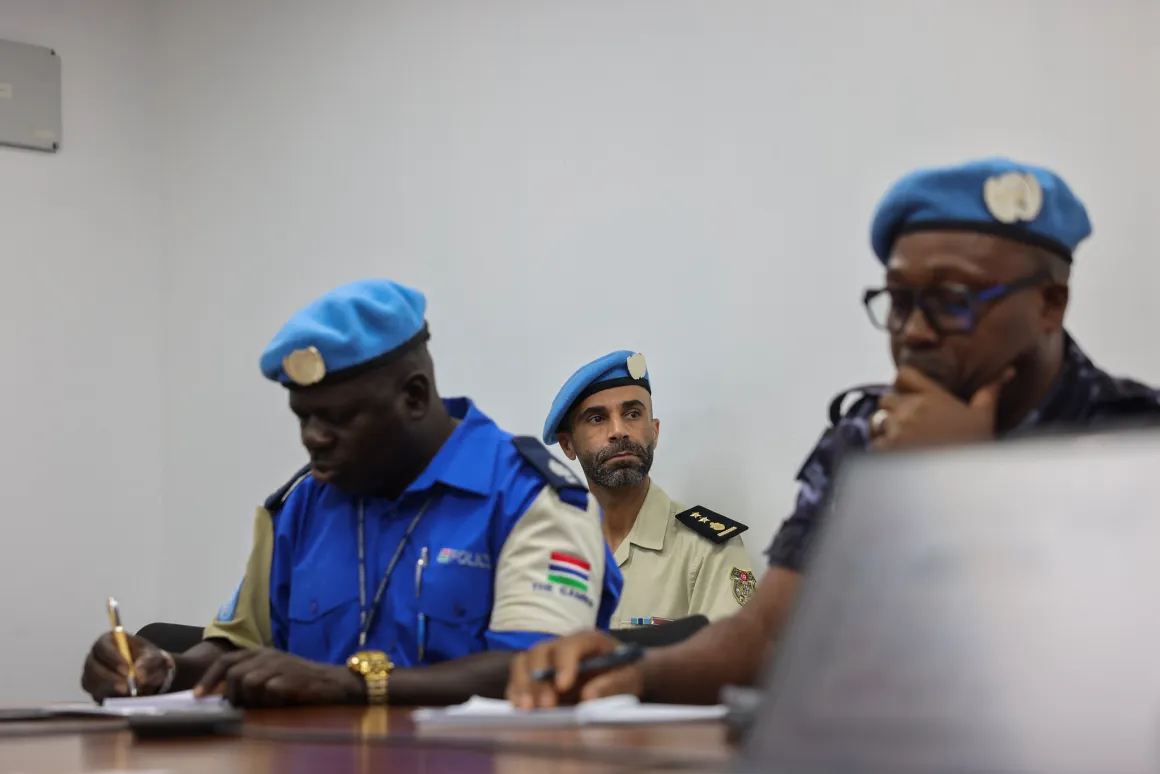
The United Nations Police (UNPOL) also contributes significantly to everyday security.
In Bunia, the establishment of the Operations Coordination Center (OCC) is a concrete example of this cooperation. Thanks to this support, the Congolese National Police benefits from technical training, equipment, and strategic guidance.
The result has been improved working methods, reduced urban insecurity, and strengthened respect for human rights.
“Thanks to this support, the Police have become more professional. And it is the population that benefits from it,” emphasized the head of the OCC in Bunia, Major Jean-Claude Mukendi, adding:
“We now have solid foundations to fulfill our mission, and the population is now better protected. Ultimately, thanks to MONUSCO and the OCC, we can now monitor the conduct of our personnel in the field through surveillance videos. This helps reduce misconduct and human rights violations that could be committed by some officers. And this is entirely beneficial for the population.”
Civilians on the front line
Beyond uniformed personnel, civilian staff also play an equally crucial role within the Mission.
In Bunia, Rosine Flore Mboule, from the Prison Administration Support Unit, works to improve detention conditions and strengthen prison security. Thanks to concrete actions — medical care, equipment, and infrastructure improvements — notable progress has been achieved: no deaths were reported in 2026 in the supported facilities.
“I remain particularly impressed by the results achieved this year, 2026, with a significant reduction in deaths in detention. Bunia Central Prison has even recorded zero deaths since the beginning of the year. This demonstrates that joint efforts in health, security, and inmate monitoring can have a concrete and lasting impact on the lives of civilians and persons deprived of liberty,” she noted.
In Beni, Marie Bulieni is dedicated to child protection by fighting against the recruitment of children by armed groups.
“A child’s place is not in an armed group, but in school,” she reminds us.
Her efforts have enabled the release and reintegration of many children who are now actively engaged in civilian life.
“One day, after raising awareness among Mai-Mai armed groups, their leaders agreed to sign commitments not to recruit children anymore, and then agreed to separate children from their groups. The Mission provided land and air logistical support, which made it possible to separate many children. Today, some of these children have become professionals in different fields and are able to support themselves. I am very proud of that,” she said with a smile.
Informing to bring calm
Within this framework, information also plays a key role. Radio Okapi, the “Frequency of Peace,” helps strengthen social cohesion by giving communities a voice and combating misinformation.
“To inform is also to protect,” explains Jean-Claude Loky, a journalist at the Bunia station in Ituri for nearly 20 years.
Through its reporting, the radio not only sheds light on realities on the ground, but also mobilizes partners’ attention to improve the living conditions of populations.
“A report produced in Ituri in 2010 highlighted the operational difficulties of a health center in Bukiringi, 110 kilometers from Bunia in the Walendu Bindi chiefdom, which faced a severe lack of equipment and resources to care for patients. After the report was broadcast on Radio Okapi, the situation attracted the attention of several partners, notably UNFPA, which eventually provided support to the health center. That day, I understood even more deeply the concrete impact journalism can have when it not only informs, but also helps improve people’s living conditions,” he recalls proudly.
An indispensable role for the future
Currently, MONUSCO maintains bases in Goma and Beni in North Kivu, as well as in Ituri.
In a global context marked by multiple crises, peacekeepers remain an essential pillar of international peace. Their work, often discreet but decisive, saves lives every day, supports the reconstruction of societies, and restores hope to millions of people.
On the occasion of this International Day, the international community pays tribute to their courage, dedication, and sacrifice.
Because peace remains a universal mission and a collective commitment.


