
MONUSCO
United Nations Organization Stabilization Mission in the Democratic Republic of the Congo

Kinshasa: From victims, young people want to become peacebuilders

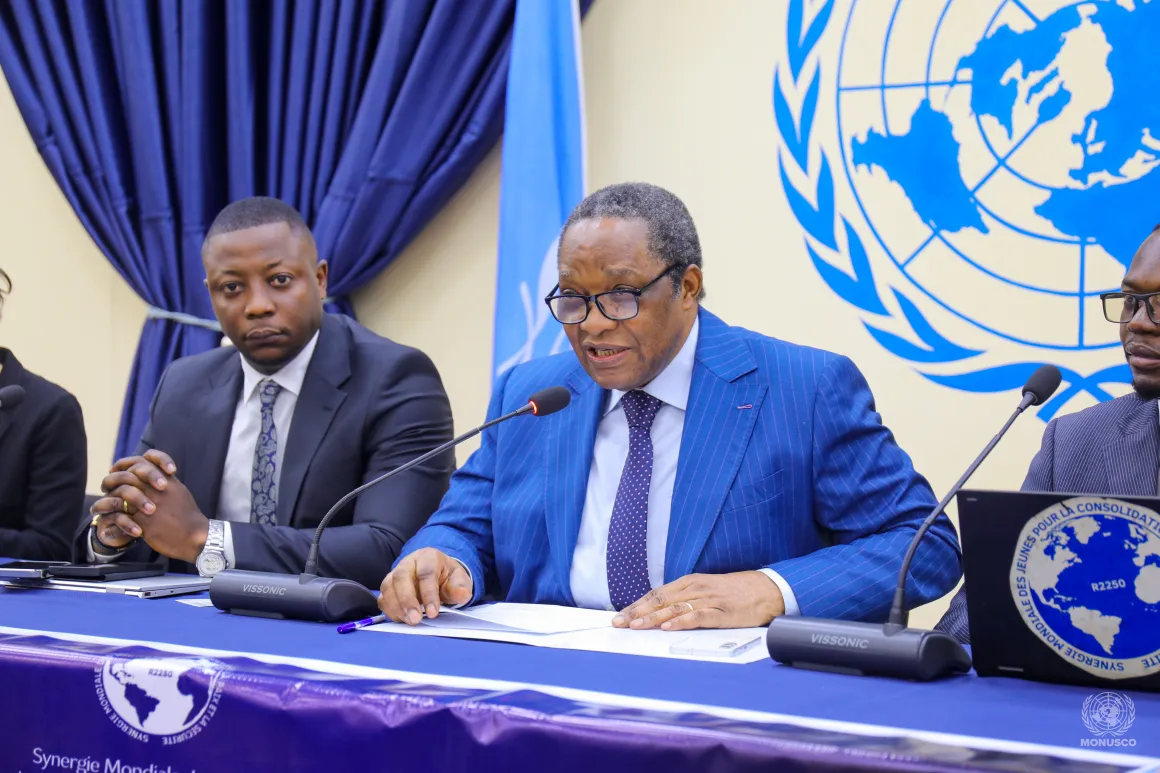
Des délégués venus de Côte d’Ivoire, du Tchad, de Centrafrique et du Congo-Brazzaville ont pris part au sommet de Kinshasa. L’Organisation ambitionne de fédérer les efforts des jeunes du monde pour arriver à une plus grande participation dans les instances de prise de décision.
Delegates from Côte d’Ivoire, Chad, the Central African Republic and the Republic of the Congo took part in the Kinshasa summit. The organization aims to bring together the efforts of young people around the world in order to achieve greater youth participation in decision-making bodies. ©MONUSCO / Nathan K
The Global Youth Synergy for Peacebuilding and Security (SMJCPS) organized a global youth summit in Kinshasa on September 3 and 4 focusing on the Women, Youth, Peace and Security agendas, as enshrined in United Nations Security Council Resolutions 1325 and 2250. The approximately sixty participants—twenty women and forty men—agreed that it was time for young people and women to move from being victims of armed conflicts to becoming actors for peace.

The SMJCPS was established in 2023 and is represented in around forty countries. Delegates from Côte d’Ivoire, Chad, the Central African Republic and the Republic of the Congo took part in the Kinshasa summit. The organization aims to bring together the efforts of young people around the world in order to achieve greater youth participation in decision-making bodies.

Des délégués venus de Côte d’Ivoire, du Tchad, de Centrafrique et du Congo-Brazzaville ont pris part au sommet de Kinshasa. L’Organisation ambitionne de fédérer les efforts des jeunes du monde pour arriver à une plus grande participation dans les instances de prise de décision.

Invited to the meeting, Professor Alphonse Ntumba Luaba, Coordinator of the National Monitoring Mechanism for the Addis Ababa Framework Agreement, told the young participants that it was not enough simply for young people to participate in institutions or attend meetings. In his view, young people need ambition and ideas to ensure that public policies are implemented in their favor. He nevertheless acknowledged that “things are moving” among young people, who are demonstrating innovation in many fields.


The challenges facing the Congo, he believes, require young people to have greater ambitions both for themselves and for their country.


“Give us a new Africa,” he urged them.
Young people face no shortage of challenges. As Martina Ndi Berinyuy of MONUSCO’s Gender Section explained, the enormous potential of Congolese youth “remains largely confronted with the consequences of decades of conflict and instability.”


“In eastern Democratic Republic of the Congo, armed violence continues to cause massive population displacement, with approximately 18.5 million people in 2026 in need of humanitarian assistance, including internally displaced persons, refugees and host communities. Thousands of civilians, including children, are killed, abducted or injured. Women are particularly exposed to multiple forms of violence, including conflict-related sexual violence. Young people, meanwhile, are sometimes recruited or exploited by armed groups, when they should be in schools, universities, businesses, public administrations and in the spaces where decisions shaping their future are made,” she explained.
Young people and women therefore bear the consequences of armed violence against which they are not always adequately protected or prepared.


Sarah Ntambwe has experienced these situations firsthand. Head of “Change Your World,” an organization founded in 2018 in Goma to prevent armed conflicts, she spent many years supporting young people formerly associated with armed forces and groups in North Kivu.
She quickly realized that women were the ones facilitating the return of these young people to their communities. Hence the need to jointly advocate for women and young people.
This is also one of the objectives of the Kinshasa summit, whose theme underscores this need:
“For Lasting Peace in the World: Positioning Young People and Women as Institutional Actors in Security, Governance and Development Policies.”
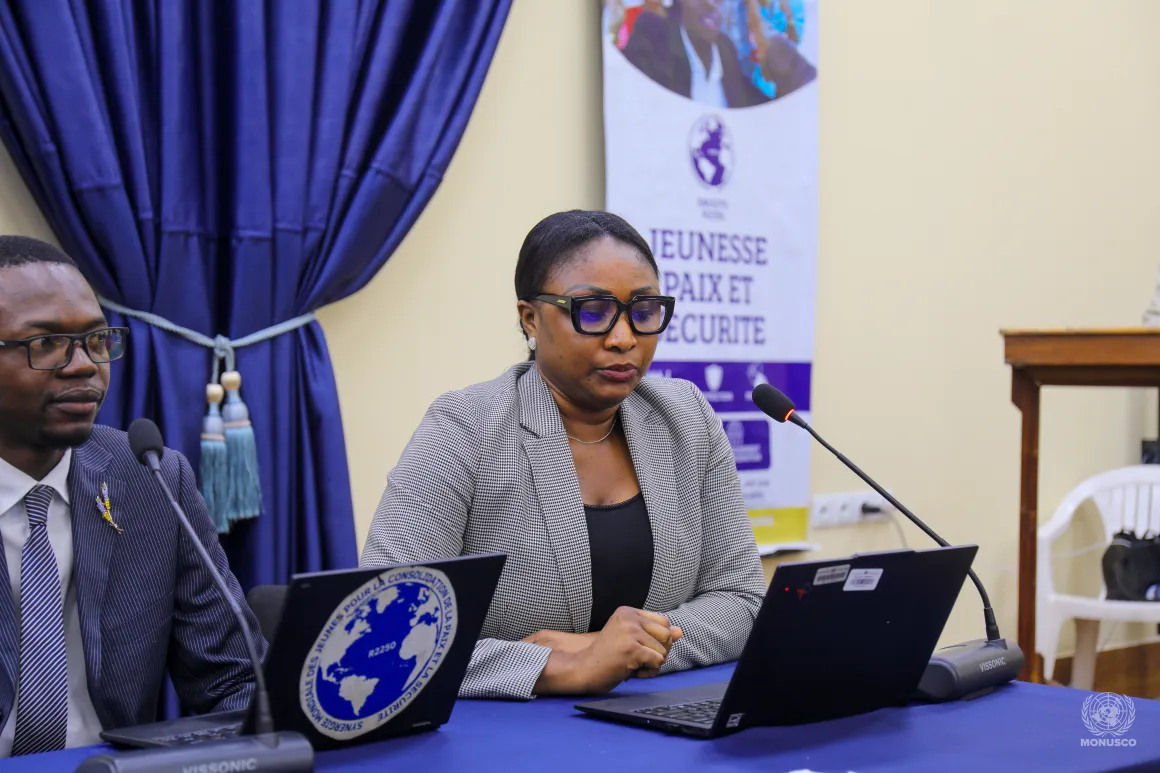
Des délégués venus de Côte d’Ivoire, du Tchad, de Centrafrique et du Congo-Brazzaville ont pris part au sommet de Kinshasa. L’Organisation ambitionne de fédérer les efforts des jeunes du monde pour arriver à une plus grande participation dans les instances de prise de décision.
PFor Martina Ndi Berinyuy, “peace can only be sustainable if it is built with women, young people and communities directly affected by conflicts.”
MONUSCO provided technical and logistical support for the organization of the youth summit.
Chris Muakuya, President of the Global Youth Synergy for Peacebuilding and Security, welcomed the initiative, which contributes to advocacy for greater youth participation in peace processes.
He believes that it is time to position young people and women “as actors in peace, governance and development policies.”


Echoing Professor Alphonse Ntumba Luaba’s call, he stressed: “We must not be content with participating in forums. We must go further. We must move from being victims to becoming actors for peace and development.”
This concern was also raised during discussions held as part of panels led by experts and various speakers throughout the summit.

-Joël BOFENGO