UN
UN United Nations Peacekeeping


MONUSCO launches water supply project in Beni
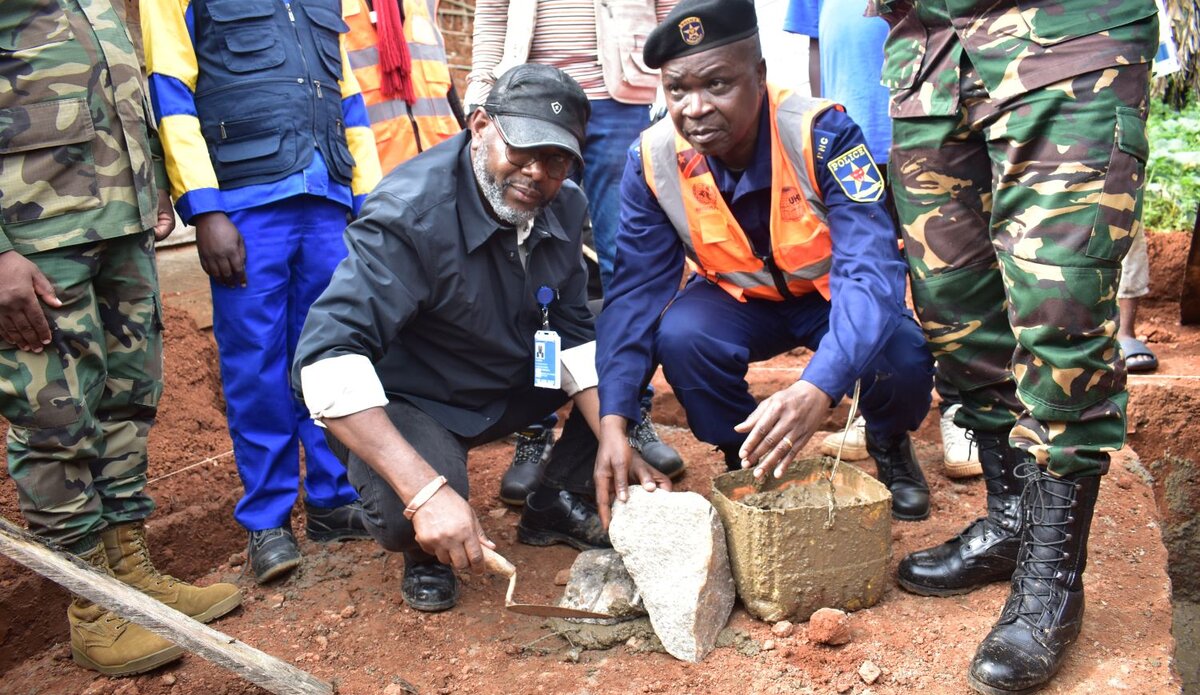
Christmas came early for residents of the Sayo neighborhood located in the northwest of the city of Beni, in North Kivu. The United Nations Organization Stabilization Mission in the DRC (MONUSCO) launched construction work on Wednesday for a drinking water supply network.
This project, initiated by Malawian peacekeepers from the UN mission, aims to improve access to drinking water in this agricultural area where women and young girls travel more than three kilometers to obtain water from a runoff water source that is unfit for consumption. This situation exposes them to insecurity and waterborne diseases.
Residents of the neighborhood – populated by many former war-displaced persons – regularly complain about the quality of water they are forced to consume.
"The population has difficulty accessing drinking water, and there has also been the problem of waterborne diseases that have intensified in the community for this population composed mainly of returnees and victims of the security crisis. This is why MONUSCO's response is welcome and beneficial to the population," testifies a Sayo resident.
"Water is life"
For Abdourahmane Ganda, head of the MONUSCO sub-office in Beni, this project is much more than infrastructure.

"We rushed to give this Christmas gift to the population, because we don't see what we can offer a human being that is better than water, because as you know, water is life. And it also strengthens our friendship with the population of Sayo," he explains.
For his part, Senior Commissioner Donat Atwena, representing the city's mayor, praised the initiative in these terms:
"This commitment demonstrates once again MONUSCO's support for stabilization efforts, community recovery, and development in our city. This drinking water supply drilling project is not only infrastructure; it is also a tool for preventing cases of waterborne diseases, a lever for social cohesion, and a peace factor; because it comes to resolve conflicts related to water scarcity and alleviate the suffering of the population."
This project, costing $48,402 USD, will benefit more than 4,000 people, 70% of whom are women and vulnerable children. Its objectives are multiple:
- Reduce the incidence of waterborne diseases
- Decrease the time and effort devoted to water collection, especially for women and children
- Improve school attendance, particularly for girls
- Support livelihoods through water availability for agriculture and income-generating activities
- Strengthen the security of women, often exposed to risks when searching for water sources
The work is expected to last three months.