UN
UN United Nations Peacekeeping

In Tchomia, a new project paves the way for reintegration of ex-combatants in Ituri
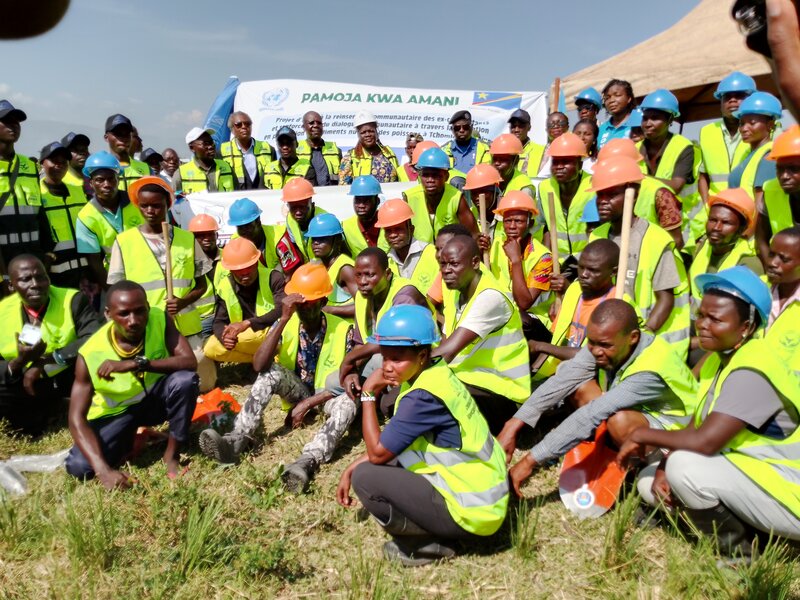
In Tchomia, a village located in the territory of Djugu in Ituri province in northeastern Democratic Republic of Congo, a breath of hope is sweeping through the communities. After years marked by conflict and instability, a new project implemented within the framework of the Disarmament, Demobilization, Community Recovery and Stabilization Program (P-DDRCS) has just offered ex-combatants a chance to rebuild their lives and bring concrete improvements that directly benefit the entire community. The national DDRCS program remains true to its promise: For, With, and By the Communities.
Following a similar program in Tsere, this project adds to a list of interventions by P-DDRCS partners, especially MONUSCO. A year after a promise made by Mr. Jean-Pierre Lacroix, United Nations Under-Secretary-General for Peace Operations, during his visit to the DRC in 2024, MONUSCO's Disarmament, Demobilization, Reintegration and Stabilization (DDR-S) section, with funding from the Stabilization Coherence Fund, officially launched work on this new project. Implementation was entrusted to two local organizations: Mwangaza Peace and the Network of Associations for Sustainable Development (RAD ASBL). Over a six-month period, 257 beneficiaries, including 89 ex-combatants, will receive training in nutritious fish feed production and participate in paid work serving their community. For these men and women, this is an opportunity to regain their dignity and active role in society after years of instability, poverty, and marginalization. In a region where livelihoods have been adversely affected by conflict, this project, led by local actors, represents a path toward stability and gives hope to thousands of displaced people wishing to return home.
« Reintegration is not a reward for violence. It is an investment in the security of our children. Every ex-combatant transformed into a productive citizen means a weapon removed and arms added to the reconstruction of our province. » mentioned Madame Irène Vaweka, advisor to the Military Governor of Ituri in charge of youth, who presided over the launch ceremony. « We thank MONUSCO, our technical and financial partner, for its invaluable support for peace and development in our province. » she added.
The heart of the project consists of building a local factory for manufacturing fish feed, as well as developing community fields intended to produce the raw materials that will supply this factory and establishing storage depots. For these ex-combatants, each bag of feed produced is a step toward reintegration and away from violence. For the community, it offers a local alternative to imported products, contributing to the economy and food security in a region where Lake Albert is an essential source of income.
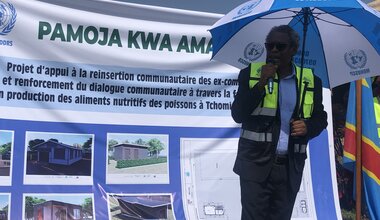
expressed Josiah Obat, MONUSCO Bureau Chief in Bunia.
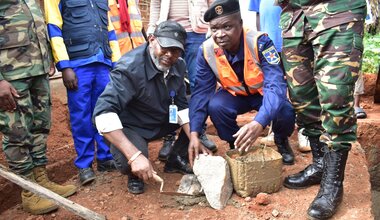
The launch ceremony organized in Tchomia was marked by the laying of the factory's foundation stone, in the presence of community leaders, local authorities and project partners. This long-awaited moment reminded residents that despite the trials they have endured, concrete initiatives can still pave the way toward a more stable future. Among the most anticipated voices was that of the Mwami of the Bahema Banywagi chiefdom, Kahwa Panga, who emphasized the strategic relevance of the project for the region.
« This is an intelligent project, because here we live mainly from three activities: fishing, agriculture and livestock. This project integrates these three sectors that reflect our daily life. The factory will not only produce nutritious feed for fish, but also for rabbits, chickens, and pigs. It is part of our chiefdom's 2026-2030 program, which aims to create wealth and fight poverty. I guarantee our partners that we will closely monitor the execution of this project until the expected results are achieved, » he emphasized.
Several administrative authorities were also present at the ceremony and reaffirmed their support for the project. "I thank MONUSCO, which mobilized the necessary resources for the realization of this project. A big thank you also to the chief of the chiefdom who supported this initiative by granting land to house the various factory buildings," declared Ruphin Mapela, administrator of the territory of Djugu. "To our partners Mwangaza Peace and RAD, you have received the resources from MONUSCO. We count on you to respect the established plans and implement what was planned. We hope that within the next three or four months, the first results will be visible," he added.
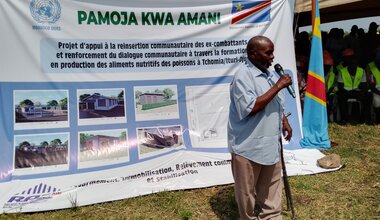
For their part, the P-DDRCS representatives, Honoré Kahwa and Fidèle Dramani, who were also present, recalled the importance of this initiative for preventing armed remobilization. By offering concrete economic opportunities and strengthening community dynamics, the project will help reduce the vulnerabilities that fuel cycles of violence. They also emphasized the ambition to see the factory fully operational within four to six months, a key milestone that will mark a turning point for ex-combatants in the process of reintegration and for all the inhabitants of Tchomia.
In conclusion, this project concretely illustrates the importance of close collaboration between state authorities at both national and local levels, civil society organizations, and international partners to support the national DDRCS program, which constitutes the exit route from armed groups who are willing to abandon violence and rebuild their country. Beyond the construction of infrastructure and the establishment of economic activities, this project helps create an inclusive environment ready to ensure sustainable reintegration of ex-combatants and strengthen social cohesion. The coming months will be decisive, transforming this initiative into a sustainable lever for security, development and hope for the population of Tchomia and the territory of Djugu.