UN
UN United Nations Peacekeeping
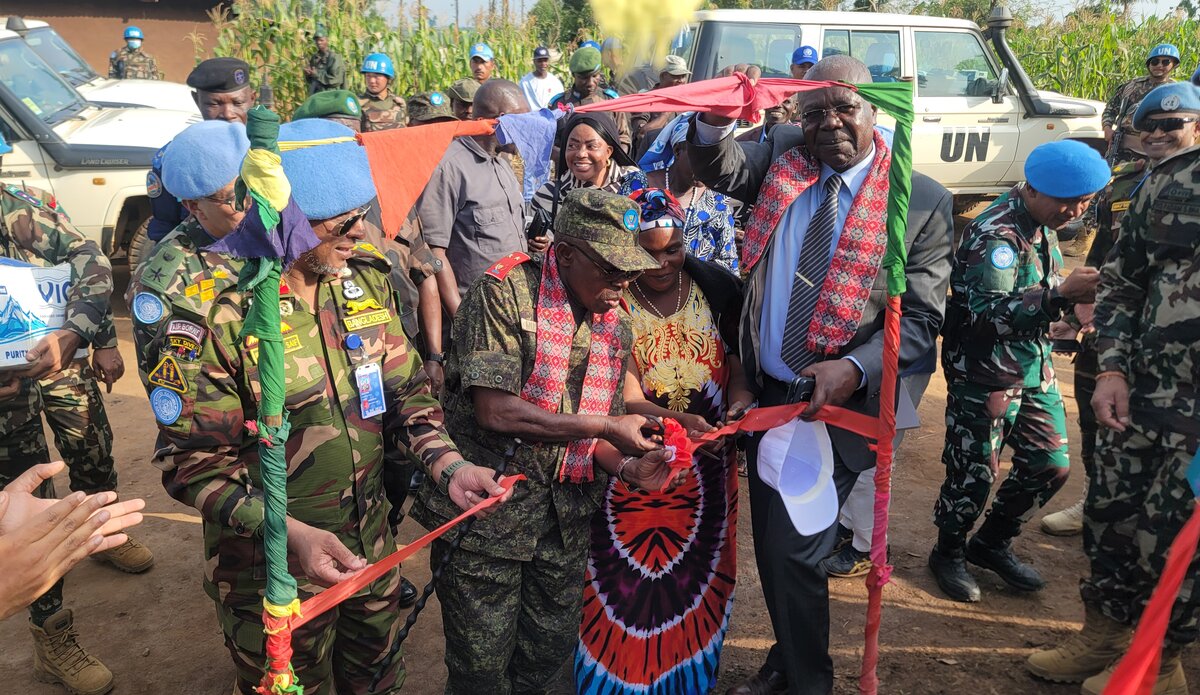
turi: A public lighting project in Djaiba to strengthen civilian security
In Djaiba, in the territory of Djugu, Ituri, a public lighting project has been implemented to improve the security and living conditions of civilian populations, particularly displaced persons settled in the area and its surroundings. Carried out as part of MONUSCO’s Quick Impact Project (QIP) program, the initiative received funding of $18,000 USD.
Public Lighting to Reduce Nighttime Insecurity
Solar panels have been installed in the center of Djaiba, in the Fataki internally displaced persons camp, as well as in the neighboring villages of Bali and Lodha. The lighting aims to limit risks related to nighttime insecurity, particularly sexual and gender-based violence, while facilitating the continuation of certain activities after nightfall.
"This is a connector project that will benefit three entities: Walendu Pitsi, Walendu Djatsi, and the Bahema Badjere chiefdom. It helps reduce cases of sexual violence and identify enemies at night. When there is no light, in this context of war, it pushes some idle young people to commit immoral acts. People come to take young girls for forced marriages or to rape them. These solar panels help us take practical security measures," says Dieudonné Cumo Kparri, chief of the Walendu Pitsi sector.

Changes Observed in Camps and Villages
Before the public lighting was installed, darkness facilitated incursions by armed groups and violence in displacement sites. "Militiamen took advantage of the darkness to rape women in the camp. Some victims are still in the hospital to this day. There was a lot of crime in the area, with young drug users. Since MONUSCO installed these panels, the threat has diminished," testifies Faustin Musinga, a notable from Djaiba.
In Lodha, the effects of the lighting are also visible in daily life. "We can now walk around at night without fear. Students review their lessons under the lamp posts, tailors work until 9:30 PM," says Safari Malo, president of the displaced persons committee.
A Response to a Deadly Attack
The project was launched following an attack in March 2025 on the camps of Djaiba and Lodha, attributed to CODECO rebels, that killed more than 70 people. Nighttime insecurity had been identified as an aggravating factor, leading local communities to request the installation of public lighting.
Implemented by MONUSCO, this project aims to strengthen the protection of civilians while supporting the resumption of local economic activities.