UN
UN United Nations Peacekeeping

In Bunia and Beni, two women share their perspectives on Resolution 1325
Marthe Dheve Dhessi and Noëlla Katongerwaki have been advocating for women’s rights for many years. In Bunia, Marthe serves as the gender focal point for the NGO Action pour la Paix et la Concorde, while in Beni, Noëlla coordinates the Women’s Action Collective for the Vulnerable.
Both share the same conviction: peace cannot be built without women.
As the United Nations Security Council Resolution 1325 marks its twenty-fifth anniversary, the two activists acknowledge the progress made while stressing the need for women’s full and effective engagement in peace efforts.
The Mission continues to advocate for greater representation of women in decision-making bodies
In both Ituri and Beni, peace remains fragile; threatened not only by the activities of armed groups targeting civilians, but also by land and customary disputes that sometimes escalate into violence and continue to divide communities.
Since 2019, Marthe Dheve Dhessi has been working as a mediator. Trained by MONUSCO, she helps communities resolve land and property disputes through peaceful dialogue. « As a mediator, I need to understand local dynamics, identify key stakeholders, and regularly analyze the socio-security context with complete neutrality. My role is to pinpoint the real causes of tension, », she explains. Her experience has convinced her that women must be at the heart of conflict resolution: « There can be no peace without women and young people. Peace is everyone’s responsibility, it is built through shared humility, never through victory over others. Women must therefore help create a peaceful, violence-free environment. »
In Beni, Noëlla Katongerwaki shares the same perspective. She believes Resolution 1325 must be better known and understood by all: «We women must take ownership of Resolution 1325 and raise awareness among our peers, both women and men, about their role in building peace. By empowering women, we enable them to contribute solutions to the challenges we face. »
Marthe Dheve Dhessi echoes this message : « It is up to women and young people to spread awareness of Resolutions 1325 and 2250, even in the most remote areas, and to use them as tools for meaningful participation in peacebuilding within their communities. »
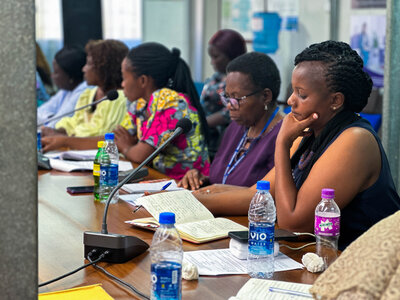
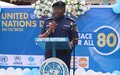
Earlier this week, a series of conferences was held in Goma, Beni and Bunia to mark the 25th anniversary of Resolution 1325. On this occasion, Vivian van de Perre, Deputy Special Representative of the UN Secretary-General in the DRC, highlighted the importance of the Women, Peace and Security Agenda in a context still marked by persistent violence. « The Mission continues to advocate for greater representation of women in decision-making bodies, », she emphasized.
Noëlla Katongerwaki believes that women’s presence in leadership positions is key to turning this commitment into reality: « Resolution 1325 marked a major step forward for women’s rights. Many women once doubted their ability to lead. Today, they know they can. When women hold decision-making positions, they naturally engage in building peace. »
The theme chosen for this commemoration captures the spirit of the celebration : « When women lead, peace follows. »